
 Web Apps
  Mobile Apps
  Enterprise Software
  Cloud Apps
  MVP Development
  UI/UX Design
  Shopify
  Business Intelligence
  Data Analytics
  AI
AI  Claude Code
  Legacy Modernization
  IT Consulting
















When deciding between custom development vs. off-the-shelf software, most companies start with the budget. They pull up the development quote and compare it to the SaaS subscription price; whichever number is smaller wins. Do they make a mistake? Not exactly. We would rather call it an incomplete calculation that covers year one only and ignores years two through five, when the true picture of costs emerges.
In this article, we have made an attempt to do the five-year math for a standard mid-sized business scenario. By its end, you will know what those later years may actually cost you.
Two Paths with Different Cost Structures
Off-the-shelf solutions are ready-made products intentionally designed for the widest possible market. Examples include SAP, Salesforce, QuickBooks, or HubSpot. In theory, any team can implement them. Such software has a moderate upfront cost and offers a familiar set of features from the first day of integration. But they have one significant downside: although they can adapt to your processes, it often comes at the cost of complexity, additional modules, or expensive customization. Instead, this is you who adapt to them.
Custom app development starts from the opposite perspective. You first define the problem and present your requirements, and engineers create the solution to it. The result should fit your workflows perfectly — nothing extra, nothing missing.
Both approaches can perform equally well depending on your needs. The mistake here will be to apply the wrong one if you underestimate your situation or make the decision based solely on the year-one budget.
Let’s Do the Five-Year Math
Let us study a hypothetic generic scenario where a 100-person company is replacing its main operational software platform. The new software affects daily workflows, should integrate with existing data infrastructure, and needs to grow with the business.
We based our assumptions on published industry data and have stayed conservative on either side.
Average Costs: Off-the-Shelf Software
- Initial setup and first-year license: $70,000. Please bear in mind that this figure can fluctuate considerably depending on use cases you are going to run with your off-the-shelf software and your company’s size.
- Annual subscription (100 users at $600/user): $60,000 in the first year with 13% annual growth. This corresponds to the average growth recorded by major software vendors (ReSubs): 13–15%. Again, all that is very relative and dependent on your particular scenario. Yet at least you will know the cost split.
- Annual overhead costs for integration and maintenance: $30,000/year.
- Workarounds and process inconsistencies can cost you $10,000/year.

Average Costs for Custom Software Development
- Development: $400,000. That’s a basic figure for an operating platform delivered by an experienced partner. As our expertise showcases, it’s a waste of time guessing the price for a piece of software unless your vendor does a deep analysis of your needs and current situation. Custom development can fall into the range of $200K–$800K+ depending on your scope.
- First-year maintenance. Oftentimes, it’s 10% of development cost, so we take $40,000 for our calculations.
- Maintenance for years 2–5: $40,000/year.
- Licensing fees: $0.
- Seat costs: $0.
- Workarounds: $0.

| Off-the-Shelf | Custom Build | |
| Year 0 (setup / development) | $70,000 | $400,000 |
| Year 1 | $100,000 | $40,000 |
| Year 2 | $107,800 | $40,000 |
| Year 3 | $116,614 | $40,000 |
| Year 4 | $126,574 | $40,000 |
| Year 5 | $137,828 | $40,000 |
| 5-Year Total | $658,816 | $600,000 |
| 5-Year Savings (Custom) | $58,816 |
At the initial point of implementation, custom development will cost $330,000 more compared to an off-the-shelf solution ($400,000 versus $70,000). For the first year, the off-the-shelf solution racks up $8,333/month. This figure covers subscriptions, integration, and performance costs, in contrast to $3,333/month to maintain the custom-built solution.
After the first year, this monthly saving of $5,000 will close the gap by $60,000 so that the team will still have $270,000 to recover by the beginning of the second year. In the second year, the subscription cost jumps by 13%, pushing the monthly outlay to $8,983, while custom maintenance holds steady at $3,333/month — a monthly saving of $5,650. Year by year, that gap keeps narrowing as the off-the-shelf subscription climbs another 13% annually while in-house support stays flat.
Each year, subscription charges go up by 13%, while in-house support stays the same. By the 5th year, that adds up to about $58,800. That is not to mention the efficiency boost, IP rights (in case of custom development, it is you who will own the source code after the dev job is done), or the continuing rise in costs after the sixth year.
Another figure not included in the table is the annual software support fees for off-the-shelf products: around 10–20% of the initial price. That’s an extra $7,000–$14,000 a year for a platform that starts at $70,000. But if you handle all the coding yourself, you don’t need to worry about extra user seats or annoying price hikes each year.

Above are only average guidelines. Your vendor contracts, user count, and process complexity change the equation. Let’s do your math.
When Off-the-Shelf Software Is Still Your Best Bet
It is entirely the context that can help you make the right choice between custom development vs off-the-shelf.
If your processes are standard (like payroll, basic CRM, email, and project tracking), custom coding won’t give you an edge over others. Why reinvent the wheel when off-the-shelf solutions are already doing the job just fine?
Speed is another reason to go with off-the-shelf solutions, because they generally get teams live much faster than custom builds, especially when the process is standard and the implementation is straightforward. In many cases, that means weeks instead of months. This is a great benefit for startups validating their business model or firms rolling out tools for short-term campaigns.
However, that speed advantage diminishes when off-the-shelf software needs heavy customization, data migration, or multiple integrations. In those cases, deployment can stretch into 2 to 6 months or even longer, which is why we tie the “faster” claim to standard implementations and not every case.
Another perk is vendor-managed maintenance. With limited IT resources, it’s convenient that software vendors take care of fixes, security updates, and infrastructure while you pay for the product.
But be cautious not to stick with this setup once it becomes obsolete. If adaptation costs exceed the license fee and the initial speed advantage evaporates, it might be time for a change.

Who Needs Custom?
There are companies with specific challenges where custom development benefits are close to obvious. What are they?

1: Your Business Processes Are Unique
How you provide your services is one of the reasons customers choose you. Off-the-shelf software wipes out this uniqueness, making you indistinguishable from your competitors who use the same systems.
2: You’ve Hit the Per-Seat Tipping Point
As we’ve already stated, software license prices often increase at renewal, and vendor-specific hikes in the 10–15% range are not unusual. It continues to climb in a never-ending manner, with no way for you to control it.
3: Integration Complexity Is Piling Up
Dependency on legacy systems affects 62% of organizations (Saritasa). 60–80% of IT budgets go for maintaining these systems (Mechanical Orchard). Off-the-shelf tools are not usually intended to interact with each other or with your current infrastructure (unless you pay for this privilege).
4: You Operate in a Regulated Industry
Custom application development means you can build in compliance from the start. You don’t have to rely on how a vendor interprets GDPR, HIPAA, or other sector-specific regulations.
5: You’re Planning to Scale
For scaling companies, growth depends on architecture decisions you made earlier. Solid architecture supports your trajectory, whilst mass-produced software may, instead, hold you back. GP Solutions develops custom enterprise applications with scale in mind from the very start.
There’s also an argument related to intellectual property. When you use off-the-shelf software, you are a tenant in someone else’s architecture. Building a custom tech solution secures your ownership. Acquirers and investors appreciate that because this ownership reads as a more reliable technical foundation.
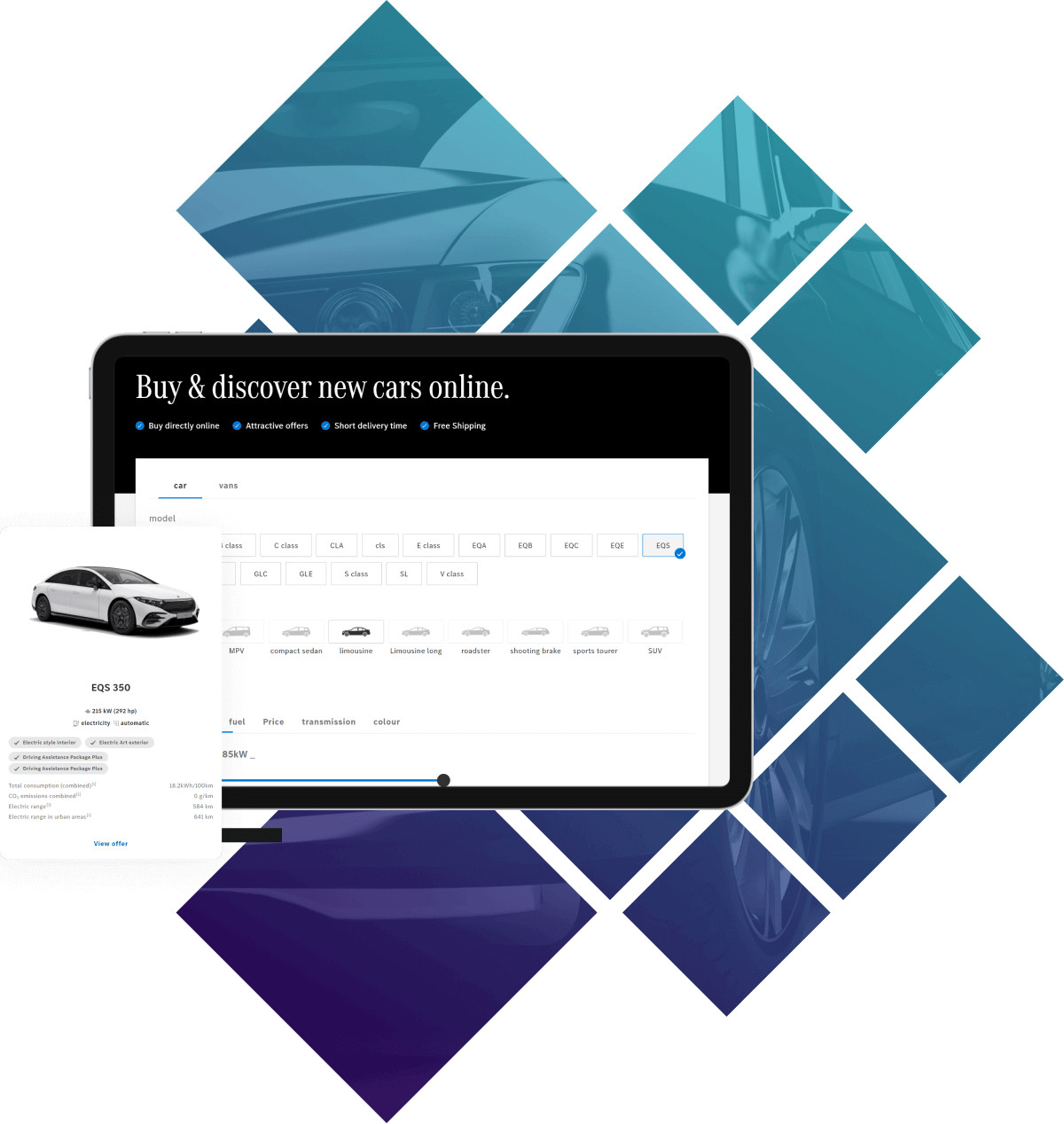
In one of our projects, GP Solutions helped a European automotive brand reinvigorate their car sales through an online platform. Since they own the source code now, all the innovation efforts they are going to make to harness their innovation strategy in the future will be vendor-independent.
Related Case Study
Dedicated IT Services for a Flagship Automotive Company
Five Trends Making the Decision Especially Relevant in 2026
1) Custom AI Agents Are Separating the Field
The integration of AI agents into business processes goes beyond supplementary infrastructure. At present, it implies crossing a competitive survival threshold. Pre-made software provides standard AI capabilities, usually generic chatbots or basic analytics. Businesses that need bespoke systems (predictive logistics, dynamic pricing, etc.) have to develop proprietary AI software using internal data. Grand View Research estimated that the global custom software market, predicted at $43.16 billion in 2024, will grow to $146.18 billion in 2030 at a CAGR of 22.6%, mainly due to AI and IoT developments.

2) Hidden Costs of Workarounds Are Getting Harder to Ignore
Finance teams require total cost of ownership (TCO) analysis, including shadow IT systems, workaround processes, and related lost productivity figures. Such costs never appear when you compare subscription line items alone. As a result, off-the-shelf solutions carry more hidden cost risks, leading to unexpected difficulties that convert into extra costs.
3) Custom Development Timelines Are Getting Shorter
Many people used to argue that custom software development takes longer than building off-the-shelf solutions. Not anymore, thanks to AI-assisted development tools. As a forward-thinking software development company, GP Solutions has recently embraced all the benefits of Claude Code implementation for its internal processes and offers relevant services for IT teams from other companies. Explore the range of Claude Code services we deliver for enterprises.
4) Vendor Dependency Has Become Risky
Software vendor consolidations, end-of-life decisions, and sudden repricing often cause vendor lock-in. If companies run all their core functions on ready-made software, they have no leverage when the provider changes terms.
5) Hybrid Approach Is Proving Its Value
Many mid-size firms now mix it up. They use standard solutions for the basics like accounting, emails, and HR but add custom software for unique tasks. This blend gives them quick setups, cheaper costs, and the room to adapt when needed.
Start with Key Questions Before Budget Talks
Before the budget conversation starts and before you take your side in custom software development vs. off-the-shelf software, pause for a moment. Ask yourself these five questions:

If your answers point to differentiation and ownership, think about custom development. Especially in partnership with a company that has done it all before.
And it doesn’t have to be all-or-nothing. Lots of companies team up with firms like GP Solutions and start small, picking just one or two unique processes to begin with.
The Bottom Line
Making a comparison list or considering prices will not help you decide between custom software development vs. off-the-shelf software. You need to think about your bigger-picture goals. Usually, the clear answer reveals itself once you look past year one.
Off-the-shelf solutions have a certain practical value: they do all the basic tasks quite well. Still, if your company is known for its unique processes as much as its products, then generic software might cap your growth. It could introduce inconsistencies, along with pricey integration and the stinging rise of subscription fees. When the CFO adds up these costs to find the total price of ownership, it’s hard to argue against their conclusions.
It’s worth noting that the global market has already made its choice: custom development vs. off-the-shelf software spending is shifting toward custom, growing over 22% annually as more enterprises learn from their experience that developing custom software is a good strategy. They have no more doubts whether to invest in custom. It’s deciding when and who they’ll partner with on their project.
GP Solutions has been crafting custom software since 2002. If you’re weighing this decision, contact us. Our technology experts will walk through the architecture and the finances with you.
Frequently Asked Questions
How long does custom software development take on average?
On average, custom software development usually takes about 4 to 9 months, with many business apps landing around 3 to 6 months for a usable first version.
Typical ranges
- Simple internal tools: 2 to 8 weeks.
- MVPs and small web apps: about 1 to 3 months or 8 to 12 weeks.
- Medium business applications: about 3 to 6 months.
- Complex or enterprise systems: 6 to 12+ months.
The timeline may change depending on the scope, integrations, data migration, testing depth, and how quickly stakeholders answer questions. Faster projects usually come from tight requirements and a smaller feature set, while delays often come from scope creep and integration issues.
What sets custom enterprise app development apart from regular custom apps?
It’s all about scale, integration complexity, and adhering to regulations. Custom enterprise app development means building software to support hundreds or even thousands of users at once. Also, these systems need to integrate with legacy ERP and CRM while following strict security rules. But again, the principle is the same — creating something that fits your company best.
When should I switch from off-the-shelf to custom software?
When you find yourself spending a lot more time working around the software than with it, you notice the licensing costs get way too high, and your plans depend too much on what the vendor decides to do next. Companies that make this move earlier avoid the technical debt that builds up while waiting — migrating off a ready-made platform gets harder, not easier, the longer you wait.